
I.
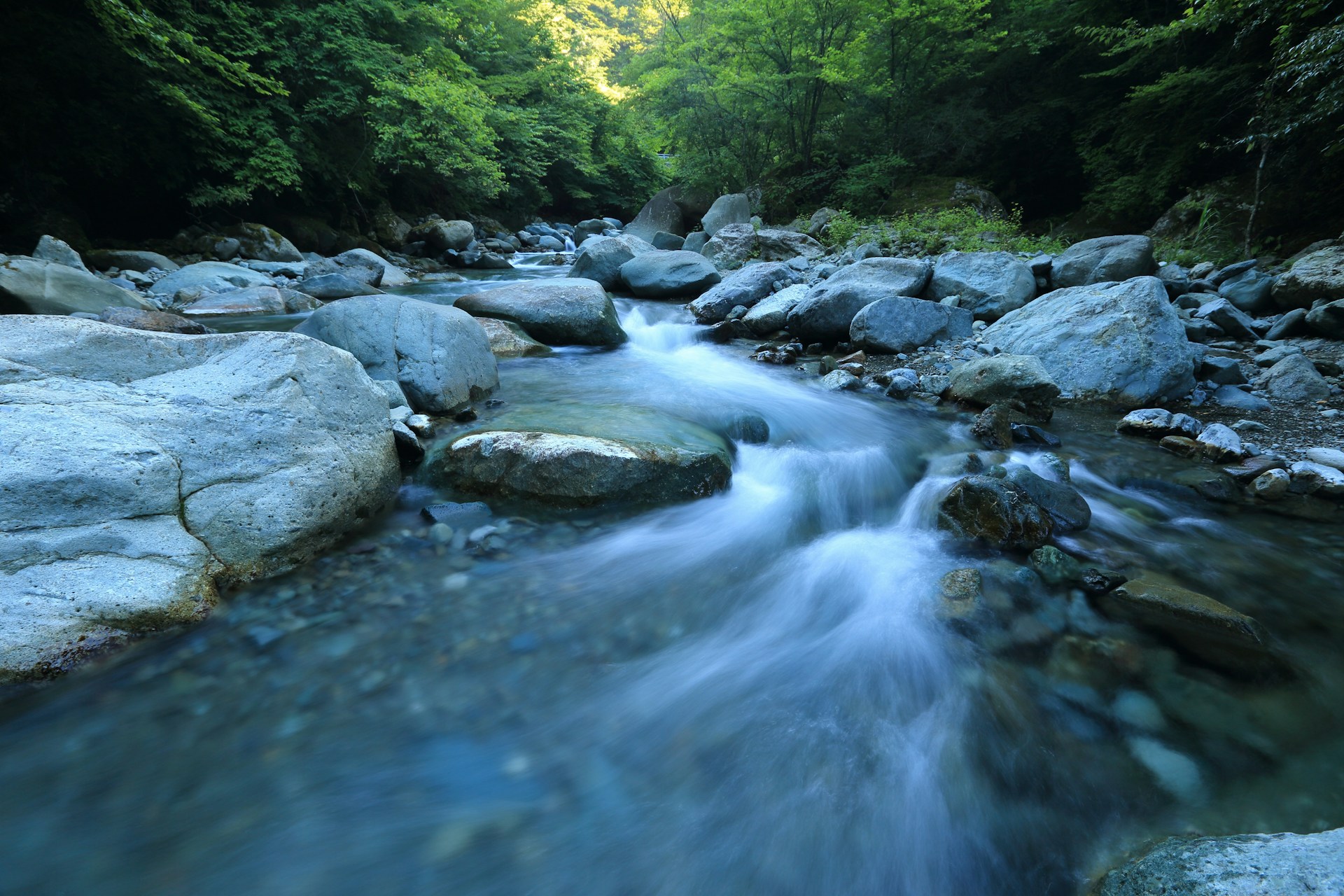
I go to the river, tell her my name
is Mary Oliver, ask what she knows
about this dying world.
The river says: Sadness is a cup
waiting to be filled. Eat the frog.
I sit among the hollow reeds and wait
for frog spawn to become tadpoles.
I hold out my cup until the sky
fills my body with blue.
The river asks me: What would you do
for money?
I say: Anything helps
in times like these.
She tells me: the sky people
are coming on their fire-breathing
dragons.
I ask the river if she knows my name.
She says: You are Man, The Robot.
I sit until the blue of the sky
fills me with heaven.
II.
I go to the river to fish for answers. I ask
the river: How does a man spend two years
dying and not realize it would be forever?
The river responds: How does a cobra cross
the road without ever raising his head?
I ask: where do we begin to comprehend
this life with all its ups and downs
She says: by the wear and tear on your knees
I say: Doesn’t it just make you sick
to think about all the things we carry
just to one day throw them all away?
The river answers: There is nothing
like the things we lose that we hold
onto in our memories.
I say: I take them out at night
and count the things I used to have.
She replies: To count what you have
is to see what you lack. To observe your feet
walking is to lose track of the path.
I say: I once had half an acre of forest
and it was the whole world.
The river says: Endings are relative.
Droughts are temporary. All salt
eventually finds its way back to the sea.
I say: You’re hurting, I can tell.
The river replies: Blessed are the hurting.
III.
I sit on a fallen tree like a mosquito so fat
with blood it cannot fly. I notice that the weeds
always smell sweetest in a drought.
I ask her: How do you wear the debilitating
weight of borrowed things?
She responds by steadily carrying
a tree limb downstream.
I tell the river: I still feel the weight
of the forgotten guilt I carry around.
She says: Attachment leads to fear
and fear guarantees loss, try to embrace
the anxiety of nothingness.
We share a modern moment and watch
cell phone towers blink to each other.
The river says: Green is the new gold.
I keep my eyes on the horizon, hypnotized
by my own wanting. I find myself insisting:
More is more.
She says: The mind wants to believe in things
the brain won’t allow.
We watch the horizon until the fish
float by on their bellies.
IV.
I go to the river and tell her: Sometimes
people just decide to stop loving you.
She says: I’ve never known a spider
to be anything other than alone.
On the horizon I see a prison and discover
that the barbed wire is not to keep prisoners
in but to keep the birds from landing.
She says: What your eyes seek is a mirror.
I offer her a photo in return.
The mirror in the river asks: Which parts
of you desire to be seen?
I respond: The part that is a reflection
of you. What does your silence say?
The river replies: When silence falls
it makes no sound. There is medicine
in the moment.
I say: The bleating of my tiny heart—
it feels so small, so compressed
I fear it can’t sustain me.
The river tells me: To begin is to believe.
Courage comes from the heart, remove
its thorn.
I stroke a clump of tall grass, turn to rise,
and say: I have only begun missing you.
V.
I go to the river and find her moving in slow
motion, like a plant. I interrupt her singing
to ask: What does it mean to cut off your own hands
to keep knives out of your clenched fists?
She replies: What does it look like to destroy
yourself to keep from tainting the water supply?
I tell her: My neighbors have cooked their soil
and served it to their children because they’re tired
of growing the corn.
She says: The soil is sick
because you’ve sold all the iodine
to a man who dumped it in the ocean.
All around us plants reach
for the sky and bow as if in prayer.
It’s been so long, I’ve forgotten
when the peonies bloom. I tell her:
The birds shred the pieces of my house
to weave them into nests. My future tastes
like boiled radishes.
The river says: My child, don’t let the absence
of meaning in the world keep you from creating
it. There is still time.
VI.
I go to the river. It is November and the clover
is blooming. The dandelions around my feet
have gone to seed. She asks me what I know
about the dying world.
I answer: The world is doomed. We no longer
trust each other with our children.
The river answers: Strength but mercy.
I say: I’ve always wanted to fly.
The river says: Flying is nature’s way
of sparing smaller creatures
from getting stomped on by life’s
elephantine feet.
I ask the river: What does it mean to die?
She says: You tell me.
I say: First you pass through the earth.
Then the rest fades: Your laugh. Your art.
With each generation your influence is halved
until you become a crease in the tilt of your
children’s faces, a hue of an iris, a whorl
of a fingerprint. The rest dissolves into the great,
wide empty. But some little part remains.
She says: That last part is true.
I say: I’d like to believe it. Does your vapor
not form a cloud or water a wildflower,
does it not become the sky’s rain?
She responds: I water the whole world.
The mountains are my fathers. I’ve spent
my whole life feeding my ocean-mother’s
great wide mouth. She is always hungry.
My children are always thirsty so they live
in my belly.
I tell her: Humans can feed themselves.
The river says: This is why you are so hard
to satisfy. There is no hunger more powerful
than thirst.
VII.
The river almost always begins
our conversations now. When we became
comfortable around each other
it was like a little death.
She says: There are so many of you and only
one of me. I am part of the Great River,
all water is One. But humans are so busy
trying to stand apart.
I say to her: I am the only me yet there are
so many of you. What do we have to do
to become one?
The river says: Once there were silver tablets
people shaped over fire. They curved and melted
the edges to form a circle, transforming
the universe from something flat into something
good and round. Don’t forget how to do this.
Your mothers call wherever you are their home.
I say: We have so many devices to keep time
and so little sense of how urgently it passes.
The river replies: They are meant to show you
that you cannot keep any of it. Time is a borrowed
road you walk in small, immeasurable steps.
I look out at the horizon until the ripples of heat
give way to an ice layer. A hole in the ice
freezes then thaws, forms a temporary agate.
The river’s voice becomes a whisper.
Faintly, she says: Life is laughter that echoes
through the universe in search of a black hole
shaped like an ear.
VIII.
The river sees that after all this time I am still
here, waiting to understand the world.
In my waiting, life passes.
The river tells me: Everything breaks
in predictable patterns, if the stress is great
enough, every structure will collapse.
Nothing is the mother of everything.
I say: But the ocean is your mother.
She replies: The rain created the ocean.
And I created the rain. There are no wounds
deeper than the ones inflicted by our children.
Don’t be immobilized by the fear of mistakes.
Algae grows in the still places.
I ask the river: What is it like to be you?
The river says: I am sensitive to poison.
I drown in the rain. Flowers tickle my ribs.
Only the smallest creatures know my multitude
of caves. This is where my secrets are kept.
What floats to the surface I share freely
with the grass and anyone who asks.
Only the grass asks.
And the coyote. And the heron.
And rainbows. And you.
I never sleep.
IX.
I go to the river. I feel time blow
past my shoulder. The world molts
like a snake shedding its skin.
I say: I’ve spent my whole life singing
other peoples’ songs. Never making my own.
She replies:
I say: I hear we are a hologram.
How can there be so much pleasure
in the body, so much pain?
The river says: That too is an illusion.
You are what you love.
I study my reflection and reply: Then, I am
the river.
Svetlana Litvinchuk is the author of Navigating the Hallways by Starlight (Fernwood Press 2026). Her poetry has received multiple nominations for the Pushcart Prize and the Best of the Net, and appears or is forthcoming in Pleiades, swamp pink, Redivider, About Place, Moon City Review, ANMLY, Iron Horse Literary Review, Lake Effect, and elsewhere. She is the Managing Editor of ONLY POEMS, Events Manager for Chill Subs, and a columnist for Sub Club. Originally from Ukraine, she now tends her garden in Missouri. Find her on Instagram @s.litvinchuk or at www.svetlanalitvinchuk.com.