
The Cliffs
Millions of years ago, the glaciers slid into their hiding places, tossing boulders and silt onto us as they carved valleys and mountains. We, the beautiful red sand of those mountains, washed down the slopes in rockfalls and avalanches, back toward the sea from where we came. Animals small and large trod over us. Plants’ roots grew between us. The wind and the rain and the snow came. The mighty mountains smoothed into hills behind us and under us. The ocean pressed farther inland. And we became the cliffs in a wild corner of what humans now call northeast Scotland.
We are the watchers − of days and nights, of seasons, of millennia − forgotten characters in humanity’s wanderings.
A thousand years ago, the cold came early, and the North Sea turned grey. A gale drove great longships to our shores. Miserable lads came off the open ships, wet and shivering. They traipsed off to the lands behind us and returned not long after, driving cattle along the den to the beach. They weren’t far from their ships when the inhabitants of the land gathered on the hill above and attacked. The longship men must have taken the goods without compensation, a sure cause for problems amongst humans for as long as we’ve been watching.
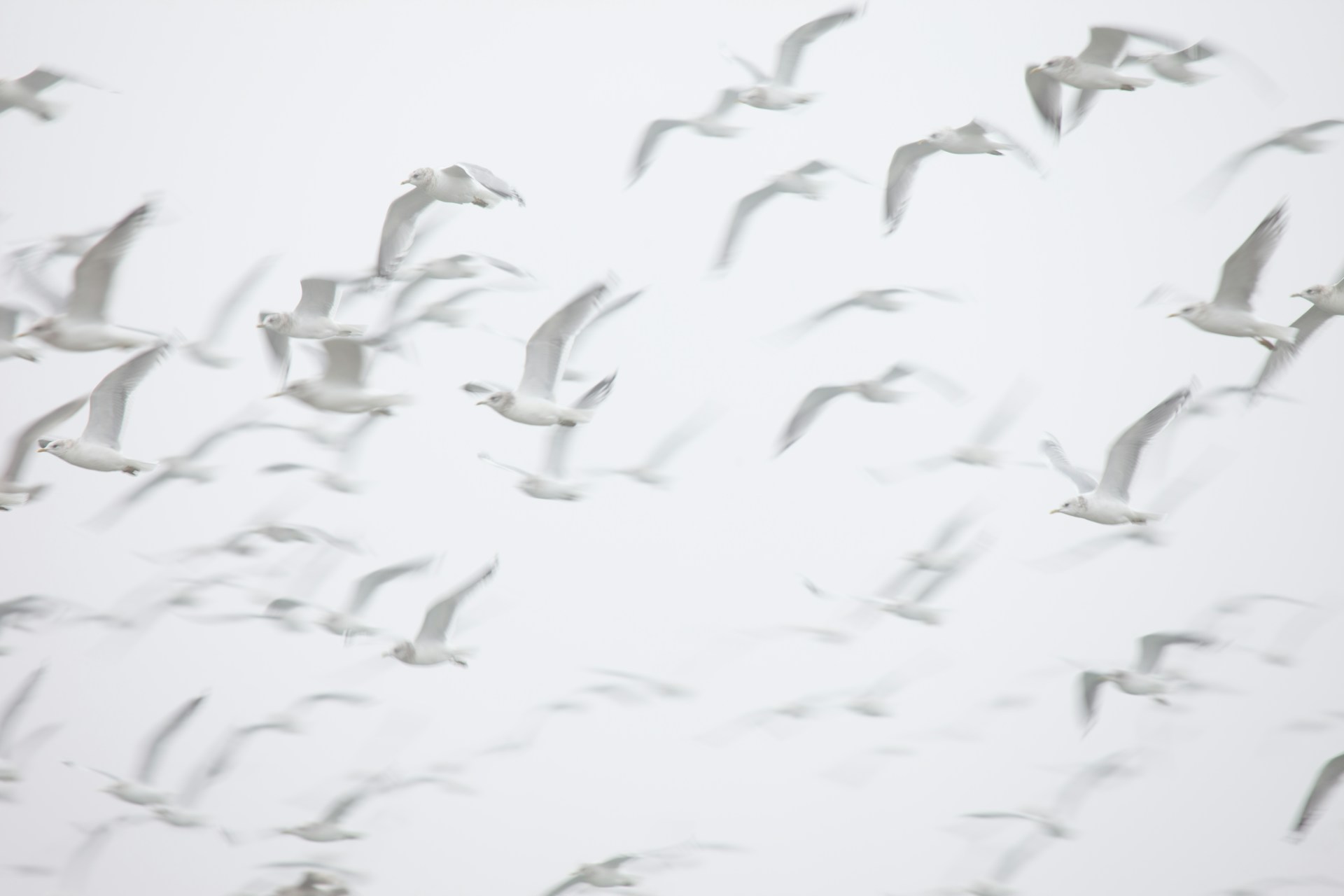
A battle followed. The black-footed kittiwakes who make their nests along our cliffs watched it all from the air. Disturbed by the palpable ill will and the clash of metal against metal, they scolded the perpetrators.
The victors threw mangled corpses into pits along our edges and left them to the elements. Wild animals crept to our pits in the dark hours to feast. They shook off the uneasy violence still lingering in the air and went on their way, stomachs gorged with human flesh. We could not rid ourselves of it so easily. Blood seeped into us. It saturated, sticky and foul, until it felt like we were the ones bleeding.
Then the wind and the rain and the snow came. We rejoiced as some of the blood washed away. We welcomed particles of sand and dirt from the hills and the beach to fill in the holes. We hoped that balance would finally return.
Many living things have died on us. We reach to embrace them after life has left, cushion their bodies. With time, we slowly absorb fur and organs and bones until they become one with us. The bones of the longship men were different. Their bodies resisted their untimely deaths even after the winged ones escorted their spirits away. Their bones didn’t rest. Instead, they squatted like a heavy boulder in our bowels. We longed to expel them from our depths.
But their story and their location have shifted from history to legend to myth among the people who call us home. Now hikers come for the view to the bay below us and children laugh and scamper over our scars without a second thought about what lies beneath.
We sigh into the wind and the rain and the snow.
The Norseman
When the chieftain sends a request for volunteers to settle in Caithness, you can barely believe your ears. You rush from the fields to your tiny longhouse in the middle of the day, work forgotten. Finally, the gods have looked on your petitions and sacrifices with favor. The opportunity for your very own farm, usually impossible for a third son. You can almost feel the rich soil between your fingers. Who needed summer raids to bring back gold when the earth supplied all the riches you could ever need?
Your wife isn’t sure at first. You’ve had to participate in more raids than expected to afford to marry her, and she patiently waited for you even when another man made an offer. You finally married three months ago. On your wedding night, she whispered that she’s already pregnant with your first child.
The growing child is all the more reason to go, you tell her. Caithness will give the child more opportunities without the need for raids. Your wife doesn’t look convinced, but you say nothing else. The raids are a source of pride for most of the men in your community and are an acknowledged way to move up in society. But you see a darker side. The heroic songs and poems don’t talk about the men who don’t come back. They’ve gone to Valhalla, the others say with a shrug, and don’t mention their names again. You’ve lost your best friend and two younger brothers. Maybe they’re happy feasting in Valhalla. You wish they were still here.
And then there’s your eldest brother. He will eventually inherit your father’s farm. He’s had the option to not participate in raids but has gone anyway. He’s always come back jubilant and full of stories of adventure. He throws big feasts afterward, pours enough mead down your throat to drown melancholy thoughts. You’ve wished all your life that the gods had seen fit to make you the eldest.
After several days of thought, your wife finally agrees for you to go to Caithness ahead of her. You’ll build a longhouse and return for her and your child next summer. It means you will miss the child’s birth. She has tears in her eyes as she says she’ll manage just fine.
The morning you leave, you promise her that there will not be any raids. It’s not a raiding party, you insist. It’s a settlers’ party. She is a blessing from the gods, you tell her as you kiss her face. She takes your hand and presses a leather cord with a small silver pendant of Mjölnir hanging from it into your palm. She closes your fingers around it, then brings your fist to her lips, her heart, and her pregnant belly.
The men burn a sacrifice before they set foot on the longship. You watch your wife get smaller and smaller on the shoreline as you work the oars with the others. She stays long after the other wives and families have left. You’re surprised to feel hot tears gather in your eyes. When the young man seated beside you at the oars gives you a quizzical look, you loudly curse a splash of seawater to your face.
Most of your companions on the journey are younger men, almost boys. There are a lot of second, third and fourth born sons. Some hope there will be gold ready to pluck from the ground in Caithness. Others hope to find a wife. One intends to capture the native inhabitants to sell as slaves. Most haven’t gone on their first raids yet. They look up to you and your experience with worshipful eyes, beg for tales of adventure. You invent a story and watch as they believe everything you say, even when you tell them you escaped a sea snake’s jaws with your bare hands. The chieftain knows better, but when you meet his eyes, he only gives you a slight nod of approval.
They will understand the truth soon enough. And then they will go back home and pretend the raids were the best times of their lives because that’s what the chieftain and their families expect. Perhaps, like your eldest brother, they will even believe it themselves.
You have favorable winds and seas for the first part of the journey, but an early autumn gale sweeps down from the north before you reach Caithness. The longship wanders at sea, unable to navigate in the weather. When the coastline finally reappears through a hole in the mist, food and water are running so low that the chieftain orders everyone except a skeleton crew to the shore for a raid. You squirm in your seat, remembering your promise to your wife.
But as one of the most experienced raiders on the ship, the chieftain expects you to help lead the others, not stay behind. You do your duty. The chieftain belts out a war song and you join in, amping up the young men around you. You howl to channel the strength and wiles of the wolf and soon the entire ship is howling, too. It’s easy to convince these young men to focus on the great rewards of a raid and forget that raiders often pay with blood.
By the time you jump into the cold grey waters of the North Sea and head inland, even you are feeling optimistic. It looks like a rural area where cattle graze, far from homes. Grab a few animals and you’ll be on your way again. You grasp the Mjölnir pendant from your wife, muttering a petition for success.
You’re soon herding cattle back down a ravine to the ships. You’re grateful there has been no resistance from the locals. In fact, you haven’t seen a single unfamiliar face the entire time you’ve been on land.
A shout goes up when the men at the front glimpse the grey sea and longships. You’ll be safely there soon. The waves crash onto the beach in the distance with a deep bass like a drum. Everyone starts running, pushing the cattle to a trot. Your heartbeat races through your ears in time with your footsteps.
A breeze from the sea blows the mist at the top edges of the ravine. Your eyes widen when you realize the deep bass you’d thought was waves is, in fact, a war drum from the army assembled above you. At that moment, they release a volley of arrows. There’s no time to even raise your shield.
You never feel the arrow that pierces your left eye and continues into your brain, killing you instantly.
The Bones
When we feel the light on our surface, we shriek, our chorus of tiny voices inaudible to anyone but ourselves. We’re used to the dark, prefer the dark.
We were the rafters around a man’s soul once, a farmer-soul. A cold, sharp piece of iron jerked him away from us in a moment’s brightness. That was the first time we endured light, a terrible time. We miss the man who inhabited us, his movements, his emotions felt into our marrow. While we provided his frame, he provided our life.
The iron is still in our left eye socket. We’ve tried to rid ourselves of it. We convinced the earth to swallow the wooden shaft attached to it. The earth tried to swallow the iron, too. But it is arrogant and refuses to go. So we must sleep wrapped in soil with the iron still there.
The second time we endured light was soon after the first. Snouts with foul breath and rotting teeth tore muscle and tendons and ligaments from us. They pierced, they gnawed, they tossed us about. We try not to remember those days. When the wind and the rain and the snow came, bringing dirt to cover us again, we welcomed it. At least we could recover some of our dignity in the darkness of the earth.
Now someone or something is disturbing everything around us. It’s not like the teeth and wet snouts. This is more measured – slow, sure movements. The brush of soft bristles, a puff of air. Light. Always more light.
One more warm breath of air and we glimpse a young woman’s freckled face. She puts a black box over her eye which clicks and sets off even brighter flashes of light. We curse her, her brushes, and her black box. Put the dirt back over us and never return. Night comes and we relax. But it’s quickly followed by the bloody sunlight of the morning and the same woman’s face and her tools. She removes the iron from our eye socket. She picks it up and turns it in her fingers, inspecting it from every angle.
Our voices hush. We’re free.
The Archeologist
Dr. Lynne Watt-Wiseman got the distinct feeling that the buried skull in front of her sighed in relief when she removed a jagged arrowhead from the left eye socket. She set the arrowhead to the side and gazed at the empty orbits peeking from the soil.
“Elise, I don’t think this person was ready to die,” she murmured to her five-month pregnancy bump. “You’ll be able to feel it, too, when you uncover bones. Can’t be explained and can’t be proven, just a gut feeling…”
Ever since the midwife had told Lynne she was having a girl, Lynne’s see-sawing feelings about her career and pregnancy had been replaced by excitement. She couldn’t wait to share digs with her daughter.
Lynne caressed the skull’s forehead, wondering whose bones they were. She couldn’t tell whether this was a male or a female yet, but she hoped it was the body of a Viking from the Battle of the Bloody Pits. If the old story was correct, many others lay buried nearby, thrown there by the victorious Scots a thousand years ago. The find would be a treasure trove of information.
Lynne pulled up images of the dig site produced by ground penetrating radar on her laptop. She noted the latitude and longitude of the find along with a brief description and measurements. After she’d snapped photos, she carefully wrapped the arrowhead and packed it away for chemical analysis in her lab at Cambridge.
She then turned to the skull itself. Selecting a brush from her tools, she started to sweep years of dirt from the bone. The dirt came away more easily than usual, and she made quick progress. It was almost as if the earth were peeling itself away from the bone. The late summer light was fading, but still, she worked. This was her favorite time, when the students had gone back to their hotels for the night and left her alone with the earth and the bones.
She almost didn’t notice the black webbed foot and the yellow beak of a seabird in her peripheral vision. She slowly turned and met the crimson lidded gaze of a kittiwake.
“Hello,” she said.
The bird cocked his head and blinked. Then his gaze turned to the skull.
“Right,” Lynne said, and returned to her work. It wasn’t long before the flap of wings and the spongy tread of more kittiwake feet came from behind her. The usually chatty birds were silent. Lynne looked around to find them surrounding her in a semicircle three individuals deep. Odd. She reached for her water bottle and drank to see whether the movement would frighten them.
The birds retreated a couple of steps and then pressed closer again, almost touching her. Images from Hitchcock’s The Birds popped into her head before she dismissed them. These kittiwakes seemed curious, not threatening.
The first one flapped his wings for a moment and landed on her shoulder. She could feel the tips of his claws through her shirt. His eyes shone in the setting sun and seemed to urge her to continue what she was doing.
Lynne did. The skull was soon halfway from the ground.
“Hello,” she said to it. “I’m Lynne. I can’t wait to get better acquainted.” She cupped her belly. “This is my daughter, Elise. She’s helping me.” Lynne glanced up and around. “And we have an audience of kittiwakes.”
The skull grinned up at her, several teeth still intact.
Lynne turned her attention to the person’s neck and chest. Once again, the earth fell away more quickly than usual. A glint of silver winked at her from the ground. Hoping it might help identify the remains, Lynne brushed harder. It was a pendant, a Christian cross. She sat back and sighed. This skeleton didn’t belong to a Viking in the Battle of the Bloody Pits. Fatigue and disappointment gathered in her eyes. She’d wanted to prove the battle was more than local lore since she was a small child sitting on these very cliffs, eating her grandmother’s steak pie and listening to her grandfather tell the story.
“Time for bed,” she said and started to pack her tools.
The birds around her rustled their feathers, chirping. It was the first sounds they’d made. They all continued to stare at the skeleton.
Lynne rubbed the back of her hand across her forehead and looked down again. She brushed a little more earth away from the pendant with her glove and leaned in for a closer look. She switched on her torch. Five minutes later, she held the entire pendant in her hand. It wasn’t a Christian cross. It was Mjölnir, hammer of Thor. Unexpected tears fell down her cheeks.
“Hello, Viking,” she whispered to the skull.
At that moment, the kittiwakes took off as one, a cacophony of flapping wings and calls.
The Kittiwakes
We are the expectant.
Ever since our cliffside homes were poisoned with violence, we have expected her to come. We never knew when it would be. There were no signs, nothing to say she was on her way. But we knew she would restore balance to our home.
As the generations have waited, we’ve lived on these beautiful cliffs. We spend most of our lives surfing the waves below and the air currents above, but these cliffs are the home we return to every summer. They are the first thing we see after the urge to crack the shell surrounding us overtakes our fear of leaving the warmth inside. They are where we first learn the heady joy of soaring through spray and clouds. They are where we first court and bond with our mates. And they are where we renew those bonds and nest every year.
Our nests are marred by whiffs of untimely death from cracks in the cliff faces. Some of us can’t stand it and move onto other colonies farther along the coast. Some of us cling to the smell because, even though it’s vile, it’s the smell of home. Others of us tolerate it because we hope.
When she comes, we aren’t sure she’s the one. We circle above her and around her. Our hearts burst with hope that she’ll pick the correct place to dig, that she’ll persevere.
She does. We sense her emotion at finding the first set of bones and know she won’t stop until she finds them all. With every sweep of her brush and gloved hands, she heals our home. Even now, the cliffs begin to sigh soft relief beneath our feet. It’s a scent we’ve never smelled before, salty and fresh. We gather around her in silent gratitude.
And when she is tired and about to leave for the evening, we fly in a cyclone of joy, our voices singing our namesake cry. Kittiwake! Kittiwake! Kittiwake!
Kelli Shea Hancock (she/her) is a writer and physician associate. Originally from Texas, she has happily lived in the United Kingdom with her husband and dog since 2019. This is her first publication.